A bag of coffee sells for $20
The country that grew the coffee captures just $3 of that value.
That’s how today’s coffee industry works.
Coffee is a $200 billion global market. Retail prices keep rising. Cafés charge more than ever. Consumers pay more than ever.
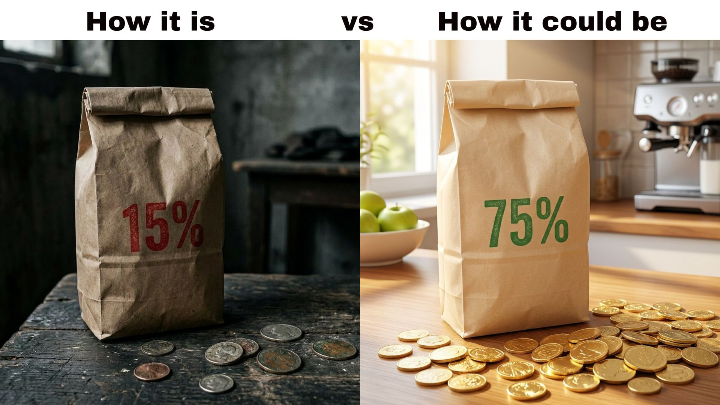
Yet the export value of green coffee usually accounts for only 15–18% of the final retail price.
And farmers? Their share is smaller still.
Research suggests farmers receive an average of 55% to 61% of the export price.
In other words: the people who grow the coffee typically receive about 10% of the final retail value. Often less.
And let’s not talk about the cappuccino you buy in your local coffee shop.
Here, the farmer’s share can fall to as little as 0.5–1%.
The problem is not that there isn’t enough value in coffee
The problem is where the value is created.
Most of the money is generated after the coffee leaves the producing country: roasting, packaging, branding, marketing, distribution and retail.
In other words, coffee-producing countries do the growing, while consuming countries capture most of the profits.
But it doesn’t have to be this way.
The biggest opportunity is value addition
Research suggests that exporting roasted coffee instead of raw green beans can dramatically increase the value retained in producing countries.
Imagine if coffee-producing countries captured 75% of the value instead of 15%.
Not through aid.
Not through charity.
Through industrialization.
That means:
• Investing in roasting and processing capacity
• Attracting strategic investment
• Removing trade barriers that punish value addition at origin
• Building regional supply chains and brands
The question to ask
The conversation about coffee sustainability often focuses on farmers.
That’s important. They do the hard work, take the risk, and receive the smallest share of the value.
Paying farmers more is crucial.
But maybe we’re asking the wrong question.
Instead of asking how producing countries can get a slightly bigger share of the coffee industry…
Maybe we should ask why they don’t OWN more of it.
Sources:
Africa's Coffee Sector: Status, Challenges and Opportunities for Growth